
Table of Contents
- Why Screen Free Toys Matter for 5 Year Olds
- The Benefits of Screen Free Play for Growing Minds
- How to Reduce Screen Time for Kids Without a Battle
- Independent Play Activities for 5 Year Olds That Actually Work
- Best Screen Free Toys for 5 Year Olds: Twist-and-Create Picks
- How to Choose the Right Screen Free Toy for Your Child
- Conclusion
- Frequently Asked Questions
Last Updated: September 16, 2026
Why Screen Free Toys Matter for 5 Year Olds
Many parents are looking for the best screen free toys for children, and for good reason. A childhood that revolves around a tablet screen is a childhood that misses out on the messy, tactile, gloriously slow business of real play. This guide from CRAMYQ is built around a simple belief: the right toy doesn't compete with a screen, it makes the screen irrelevant.
Children are developing the fine motor control to twist, build, and manipulate objects with purpose, while their imaginations are running at full speed. Screen free play builds the foundations for concentration, problem-solving, and self-entertainment. The benefits of screen free play show up in how a child learns to occupy themselves, not just in what they learn.
The Benefits of Screen Free Play for Growing Minds
Screen free play is any activity that engages a child's hands, body, or imagination without a digital device. A common approach is to think of it in three types: constructive play (building and making), imaginative play (pretend and storytelling), and physical play (moving and manipulating).
The benefits of screen free play are cumulative. Each session of twisting, sorting, or building strengthens hand-eye coordination and the small muscles needed for handwriting. It also builds attention span, because a physical toy doesn't offer a new dopamine hit every few seconds. Children learn to sit with a challenge and work through it.
There's a social dimension too. Toys that invite a sibling or a parent to join in turn solitary play into shared play, which builds turn-taking and language skills. The quiet, focused child and the boisterous one both find something to do.
How to Reduce Screen Time for Kids Without a Battle
Battles over screens usually start because the alternative feels boring by comparison. A common mistake is to remove the tablet and offer nothing in its place. The trick is to make the hands-on option genuinely more appealing, not just available.
Try these tactics:
- Set a predictable routine so screen time has a clear start and end, rather than being negotiated in the moment.
- Keep a small basket of "special" toys that only come out at the times screens would normally appear, such as long car journeys or quiet afternoons.
- Play alongside your child for the first few minutes to get them started, then step back.
- Offer a choice between two hands-on activities, so the child feels in control.
Independent Play Activities for 5 Year Olds That Actually Work
Independent play activities work best when they have a clear goal but no fixed answer. Open-ended toys let a child decide what to do next, which is exactly what holds attention without an adult directing every move.
Good options include:
- Building toys with a simple mechanism a child can master alone
- Drawing and craft materials that don't need supervision
- Puzzles with a satisfying, repeatable action
- Small-world play with figures or animals that spark storytelling
The key is the "just right" challenge: hard enough to be interesting, easy enough to succeed at without help. A toy a child can operate entirely on their own builds real independence, and that independence is what lets you step away.
Best Screen Free Toys for 5 Year Olds: Twist-and-Create Picks
The best screen free toys are the ones a child can pick up, master, and return to again and again. CRAMYQ makes twist-and-create animal puzzle toys that fit this brief exactly: a rotating block toy where every twist reveals a different creation.
CramyQ Lion – Animal Puzzle Toy →

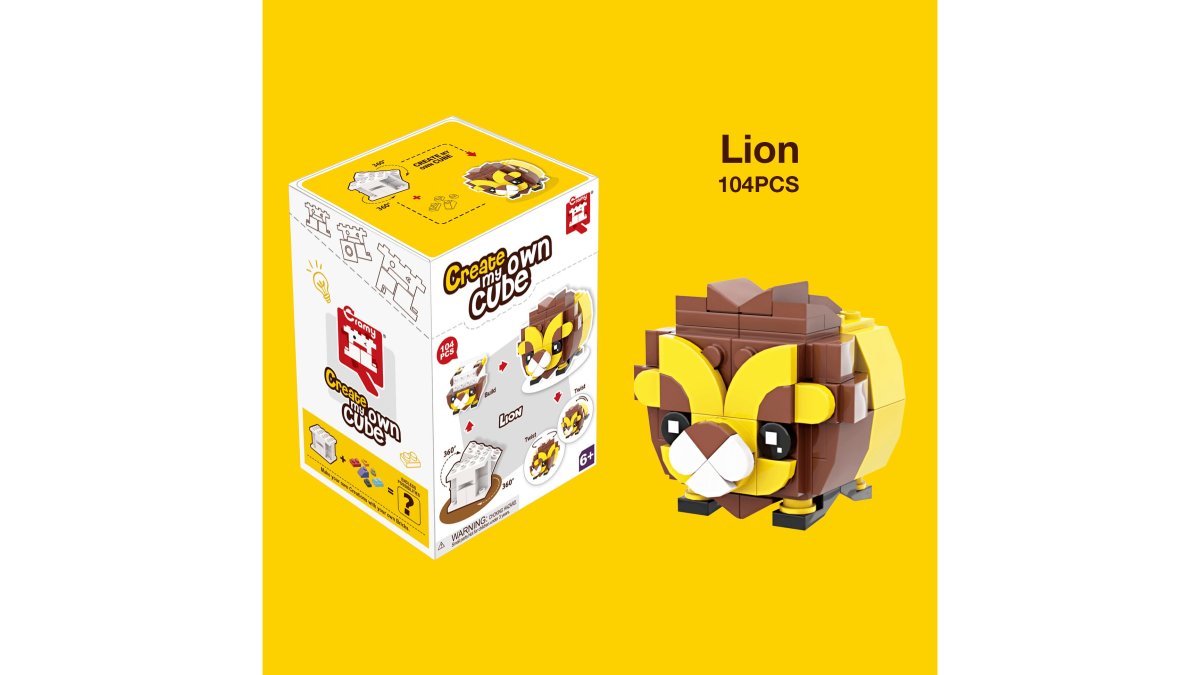
Our top pick is the CramyQ Lion - Animal Puzzle Toy. It's a hands-on puzzle that rewards curiosity, and at £14.99 it works as a stocking filler or a Christmas gift under £20. The twist-and-create action gives a child something to do with their hands and a small surprise with every turn.
The collection runs to 12 animals, so children can build a set over time. Each one is a standalone toy, so you don't need to buy everything at once. Here's how a few of the characters compare:
| Toy | Price | Play Style | Best For |
|---|---|---|---|
| Lion | £14.99 | Twist-and-create | Confident little hands |
| Tiger | £14.99 | Twist-and-create | Animal lovers |
| Panda | £14.99 | Twist-and-create | Calm, focused play |
| Elephant | £14.99 | Twist-and-create | Collectors |
| Koala | £14.99 | Twist-and-create | Stocking fillers |
The twist mechanism is the clever part. A child doesn't need instructions or an adult to make it work, which is what makes it a genuine independent play option. It's also compact, so it travels well in a bag for quiet time away from home.
How to Choose the Right Screen Free Toy for Your Child
Choosing well comes down to three questions: can my child operate it alone, will it survive rough play, and does it offer more than one thing to do?
A toy that only does one thing gets boring fast. A toy with a repeatable, discoverable mechanism keeps giving. Durability matters just as much, because a toy that falls apart after a few twists teaches a child that their things aren't worth looking after.
Look for toys that reward patience and don't punish mistakes. The best choice is the one your child reaches for without being asked.
Conclusion
The hardest part of screen free play is finding a toy that earns its place in the rotation. If you're looking for a stocking filler or a Christmas gift that keeps a child busy without a screen, the CramyQ twist-and-create animal puzzle toys are built for exactly that: hands-on puzzle play, a 12-animal collection to gather over time, and a compact size that travels anywhere. Get started with CRAMYQ and give a child something worth twisting.
Frequently Asked Questions
What are the benefits of screen free play for children?
Screen free play builds fine motor skills, problem-solving, and creativity. Hands-on toys like twist-and-create puzzles let children experiment with cause and effect. It also supports language development through storytelling and role play. Unlike passive screen time, active play helps children regulate emotions and build independence. For 5 year olds, even 20 minutes of focused screen free play can improve concentration and mood.
How can I encourage my 5-year-old to play independently?
Start with open-ended toys that have a clear goal but no single solution, such as twist-and-create animal puzzles. Set up a play station at their height and rotate toys weekly to keep novelty high. Try a 10-minute 'special play' where you sit nearby but do not direct. Gradually increase alone time. Praise effort, not just results. Most 5 year olds can manage 15-30 minutes of independent play with the right setup.
What types of toys help develop fine motor skills in 5-year-olds?
Toys that require twisting, turning, pinching, or assembling are ideal. Rotating block puzzles, threading beads, and building sets all strengthen hand muscles. Look for toys that need both hands to operate, like CramyQ animal puzzle toys, which involve twisting different sections to create new animal shapes. These actions build dexterity and hand-eye coordination, which support handwriting and self-care skills later.
Are STEM toys considered screen-free?
Many STEM toys are screen-free, but not all. Building blocks, magnetic tiles, and mechanical puzzle toys teach science and maths concepts without any digital element. The key is whether the toy itself requires a screen to function. Twist-and-create animal puzzles are a good example: they encourage spatial reasoning and pattern recognition, all through physical manipulation. Always check the product description for app or device requirements.
How do I choose age-appropriate toys for a 5-year-old?
Look for toys labelled for ages 6 and up if your child is ready for more challenge, but always supervise. For a 5 year old, choose toys that are safe, durable, and match their interests. Avoid small parts that could be a choking hazard. Consider toys that grow with your child, like collectible animal puzzles that offer multiple creations. Check that the toy encourages active play rather than passive consumption.